Shadow Fight 4: Arena
- 4.7
- Rating
- 50.00M
- Installs
- Free
- Price

 Analysis by App-foxy
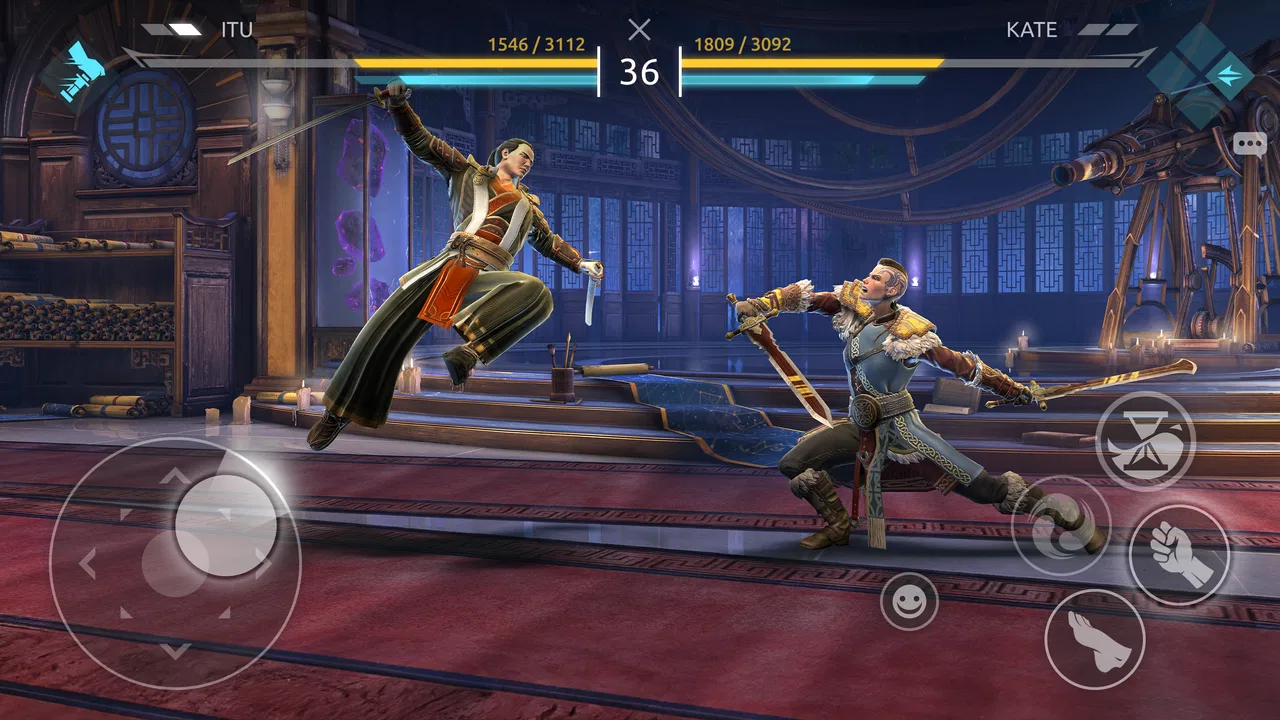
I approached Shadow Fight 4: Arena as a mobile role-playing game for short competitive sessions rather than as a traditional, story-heavy adventure. Developed by NEKKI, it puts the focus on entering the Shadow Tournament, choosing a fighter, and making quick decisions in direct arena battles. My first impression was that it is built to feel immediate: you can get into a match without first working through a long opening chapter or a complicated menu system.
That immediacy is also the most important thing to understand before installing it. This is not the right choice if you want a quiet, turn-based RPG or a large open world to explore at your own pace. It is much better suited to someone who enjoys learning combat patterns, reacting under pressure, and gradually becoming more consistent. I found that the game’s appeal comes less from simply collecting victories and more from noticing why a particular exchange went wrong.
How Shadow Fight 4 feels during real play
I found that the most useful way to judge Shadow Fight 4: Arena is to treat each match as a small lesson, not just a win-or-lose result. In this section, I look at how its quick exchanges reward attention, why short sessions can still feel intense, and what to watch for when deciding whether its pace suits you.
You May Also Like

 Blood Strike: 2.5 Anniversary
Blood Strike’s Loadouts Turn Every Drop Into a Tactical Gamble
A close look at Blood Strike’s custom loadouts: how fast access to signature weapons reshapes its battle royale rhythm, rewards preparation, and narrows the gap between fights.

 Pandora - Music & Podcasts
Pandora’s Music Is Easy to Start, but Harder to Recover
Pandora’s strength is its low-effort path from a seed to a station. Its weak spot is how much confidence it asks you to place in connection, setup, and quiet recovery.

 8 Ball Pool
 Is Built on Rivalries, Rematches, and Routine
A close look at the rivalries, rematches, shared routines, and unanswered safety questions that turn a quick pool match into a persistent mobile community.

 Samsung Music
’s Quiet Strength Is Playing What You Already Own
Its reach comes less from spectacle than from dependable access to a personal library. That simplicity is both the app’s strongest retention engine and its ceiling.

 AccuWeather: Weather Radar
AccuWeather Review: A Quick, Clear Forecast for Everyday Decisions
For everyday plans, the best forecast is the one you can understand quickly. AccuWeather makes rain timing, radar, and local conditions easy to act on, with a few trade-offs.

 Hill Climb Racing
Why Hill Climb Racing Still Turns Crashes Into One More Run
A tiny car, a bumpy hill and one more upgrade: Hill Climb Racing keeps resurfacing because its simple chaos makes every near-miss feel personal.
More From Our News Desk
View All News


Quick sessions with a demanding rhythm
The game’s speed is easy to notice, but “fast” does not mean mindless. Matches move quickly enough that hesitation can cost an opportunity, while rushing every attack usually creates a different problem. I had to pay attention to spacing, timing, and the opponent’s habits instead of repeatedly pressing the same action. That gives each short session a surprisingly focused feel.
For an everyday example, I can imagine playing during a commute or while waiting for an appointment. One match is manageable when I have only a few minutes, and a longer session naturally becomes a sequence of attempts to improve. The useful part is that a defeat can be examined immediately: did I attack from too far away, react late, or allow the opponent to control the pace? That makes the game easier to return to than an RPG that requires remembering a large quest chain.
There is a trade-off here. The compact format does not make the game relaxing for everyone. Competitive combat can leave me more alert than refreshed, especially after several close losses. If I want something passive to play while distracted, this is a poor fit because missed reactions matter. The game rewards giving it my attention, even when a session itself is brief.
What makes the combat feel responsive
The strongest part of the experience is the relationship between decision and consequence. A successful move feels useful because it changes the exchange, while a poorly timed attempt can leave me exposed. That creates a clear learning loop: observe, try a response, fail or succeed, then adjust. It is a more satisfying form of progression than simply watching numbers rise after every battle.
One practical tip is to treat early matches as observation sessions. Instead of trying to win every exchange, I watch how an opponent approaches, when they become vulnerable, and which moments are safest for me to act. This is especially helpful for players coming from slower role-playing games, where preparation often matters more than split-second reactions.
I also recommend changing the way I evaluate a match. A narrow defeat can be more useful than an easy win if it reveals a repeatable mistake. For example, constantly attacking after a successful hit may feel aggressive, but it can make my next move predictable. Pausing briefly and waiting for the opponent’s response often teaches more than adding another attack to the sequence.
Heavy-use moments and the cost of longer sessions
The most demanding moments are not necessarily the opening seconds of a match. They arrive when several battles are played in succession and I am trying to maintain concentration. Fast reactions become less reliable when I start making decisions automatically. In my experience, this is where a short break helps more than forcing another attempt.
Longer sessions can also make the game feel more demanding on the device than a quick check-in. I would not judge performance from a single brief match alone; I would pay attention to how the phone behaves after repeated play, especially if other apps are active in the background. That is a sensible habit for any visually active fighting game, and it matters more here because the timing-based design makes interruptions or sluggish responses particularly frustrating.
My advice is to close unnecessary background activity before a serious session and avoid treating every match as a test of endurance. That is not a claim about a specific hardware requirement; it is simply a practical way to reduce avoidable distractions. If the phone becomes warm or the controls stop feeling consistent, taking a break is better than blaming every loss on personal skill.
Stability, connection, and returning after interruptions
Reliability matters greatly in a competitive arena game. A role-playing title with exploration can sometimes tolerate a pause or a delayed response, but a fighting exchange is less forgiving. I therefore value predictable control more than an impressive amount of content. When the game behaves consistently, I can focus on learning the matchup rather than wondering whether a missed action came from my timing or from the device.
Mobile interruptions are another realistic concern. A call, notification, or accidental app switch can break concentration at exactly the wrong moment. I would start important sessions only when I have enough uninterrupted time, rather than launching a match while expecting to multitask. This is one of the clearest differences between Arena and a casual puzzle game: the latter may let me step away without consequence, while this one asks me to stay present.
Recovery is most useful when I approach it methodically. After an interruption or a poor match, I prefer to reset my attention instead of immediately repeating the same action. A short pause, followed by a simpler goal such as watching the opponent’s opening, can restore control. The game is at its best when I use losses as information rather than as a reason to chase a quick win.
Playing on older or less powerful phones
The game supports devices running Android 8.0 or later, which gives it a broad starting point for Android users. That does not mean every compatible phone will offer the same experience. Screen response, available memory, background activity, and general device condition can all affect how comfortable a timing-sensitive game feels.
On a modest phone, I would judge it by three questions: do inputs register reliably, does the display remain comfortable during repeated matches, and does the device stay usable after closing the game? Those questions are more helpful than focusing only on whether the application opens. A game can launch successfully and still feel unsuitable if the phone struggles during sustained play.
Players with older hardware should begin with short sessions and observe how the device responds. If the experience remains stable, Arena may be perfectly practical for occasional play. If the phone shows signs of strain during other demanding apps, I would be cautious about expecting a consistently comfortable competitive experience. In that situation, a lighter RPG or turn-based game would probably be a better match.
Storage and battery habits are worth considering too, although I would not treat Arena as a replacement for a dedicated console fighting game. Mobile play is convenient precisely because the phone is always available, but that convenience also means the game shares resources with messaging, streaming, navigation, and other daily tasks. I prefer to keep enough free space and avoid starting a long session when I need the phone for something important afterward.
Learning efficiently instead of spending blindly
The free entry point makes it easy to try the game without paying first. The title includes in-app purchases ranging from $0.49 to $149.99 per item, so I would set a personal spending limit before becoming invested in progression. The wide range is a reminder that free installation and optional purchases are separate decisions.
My practical approach would be to play long enough to understand whether the combat itself is enjoyable before considering any purchase. If I am losing because I have not learned spacing or timing, buying something will not solve the main problem. A purchase makes more sense only when I already know that I like the core loop and understand what I am choosing to support.
This also affects who should skip it. Anyone who dislikes competitive pressure, prefers a complete offline-style adventure, or feels uncomfortable with optional spending around progression may be happier with a premium RPG that has a simpler payment model. Arena is a better choice for players who can enjoy improvement independently of purchases and who are willing to treat the store as optional rather than necessary.
How it compares with other mobile RPG choices
Compared with a conventional mobile RPG, Arena is narrower but more focused. Many role-playing games emphasize quests, equipment, dialogue, exploration, and long-term character development. Here, the immediate skill of controlling a fighter carries more weight. I get less of the “live in a world” feeling and more of the satisfaction that comes from refining a specific type of play.
Compared with a casual action game, it demands more discipline. A casual title may let me win through repetition, while Arena encourages me to understand why an exchange succeeds. That makes it more rewarding for players who enjoy practice, but less forgiving for someone who wants instant progress after a tiring day.
Compared with a dedicated fighting game on a larger screen, the phone format is convenient but naturally less comfortable for extended sessions. Touch controls compete with the limited space of the display, and the quality of the experience depends on how well the device responds. I would choose Arena for accessibility and quick matches, not because it replaces every advantage of a console or PC.
Who will get the most from it
I think the best audience is a player who likes competitive battles but wants them in a portable role-playing package. It works particularly well for someone who enjoys identifying patterns, practicing a response, and measuring improvement over repeated attempts. The game can also suit a friend who wants a focused mobile activity rather than a large download filled with unrelated systems.
It is less suitable for people who want extensive storytelling, relaxed grinding, or a game that can be played comfortably while watching television. The Teen content rating is another useful signal for families deciding whether it matches their preferences. I would explain to a younger player that the competitive format and optional purchases deserve adult awareness, even though the game is free to install.
The large player response gives the game a strong sense of relevance: it has an average rating of 4.7 from around 1.8 million ratings, with more than 50 million installs. Those figures do not guarantee that every player will enjoy it, but they do suggest that the central arena concept has reached a substantial audience. I would still base my decision on whether I enjoy responsive combat, not on popularity alone.
Version, upkeep, and the long-term question
The current version is 1.9.60, and the game was released on November 3, 2020. That history matters because it places Arena in the category of an established mobile game rather than a brand-new experiment. I approach an established title with two expectations: the basic format should be familiar and polished enough to understand quickly, while the long-term experience may feel more intimidating to a newcomer facing experienced players.
The most useful way to start is to avoid comparing my first sessions with players who have clearly invested more time. I would choose a small improvement target, such as defending more patiently or avoiding predictable attacks, and judge progress against that target. This keeps the competitive side from turning the opening hours into a frustrating search for instant mastery.
It is also worth deciding what “progress” means personally. If I need a constant stream of story rewards, Arena may feel limited. If I enjoy the process of making better decisions, the same structure can remain interesting for much longer. That difference explains why two players can react very differently to the same match-based design.
My performance verdict
My overall view is that Shadow Fight 4: Arena is a strong fit for focused mobile combat, provided the phone handles it comfortably and I give each match my attention. Its perceived speed is one of its biggest strengths, but that speed also exposes weak timing, interruptions, and device limitations. I would not install it expecting a passive or purely relaxing RPG.
For a reliable everyday routine, I would use it in short sessions, keep background distractions low, and stop when reactions become sloppy. I would also test the free experience thoroughly before spending anything, especially because individual purchases can reach $149.99. That combination of restraint and deliberate practice gives the game its fairest chance.
NEKKI has made a portable arena game that rewards attention more than button mashing. I recommend it to players who want competitive role-playing action, quick matches, and a clear reason to improve after a defeat. I would steer others toward a slower RPG or a lighter casual game if they value exploration, uninterrupted story, or relaxed multitasking more than combat precision.
My final recommendation: try it if the idea of learning an opponent’s rhythm sounds satisfying, not merely if you want something free to fill a few minutes. When the controls feel stable on your device and you accept the competitive pressure, Arena can turn short mobile sessions into genuinely engaging practice.
FAQs for Shadow Fight 4: Arena
01What is Shadow Fight 4: Arena about?
Shadow Fight 4: Arena is a dynamic multiplayer fighting game where players engage in real-time battles. Set in a visually stunning arena, it offers a rich roster of characters, each with unique abilities and fighting styles. The game emphasizes strategy and skill, providing an engaging experience for both casual and competitive players.
02How does the game’s progression system work?
The progression system in Shadow Fight 4: Arena is based on character leveling and unlocking new abilities. Players earn experience points through battles, which help to level up characters. As you progress, you can unlock new moves and customize characters, enhancing gameplay and offering strategic depth in battles.
03Is Shadow Fight 4: Arena free to play?
Yes, Shadow Fight 4: Arena is free to download and play. However, it includes in-app purchases for various items, such as character skins and power-ups. While these purchases can enhance the gaming experience, they are not mandatory to progress in the game, allowing players to enjoy it without spending money.
04What are the system requirements for the game?
To run Shadow Fight 4: Arena smoothly, Android users need a device with at least 2GB of RAM and Android version 5.0 or higher. For iOS users, the game requires iOS 10.0 or later. These specifications ensure optimal performance, though lower-end devices might experience lag or reduced graphics quality.
05Does Shadow Fight 4: Arena support multiplayer modes?
Yes, Shadow Fight 4: Arena is designed with multiplayer at its core. It offers various modes, including real-time PvP battles, where players can challenge friends or compete against others globally. The game’s matchmaking system ensures balanced competition, keeping the battles fair and engaging for all skill levels.
Pros
- Smooth and intuitive combat mechanics.
- Stunning graphics and animations.
- Regular updates with new content.
- Diverse character roster with unique skills.
- Engaging multiplayer battles.
Cons
- Requires stable internet connection.
- In-app purchases can be pricey.
- Some characters need balancing.
- Steep learning curve for beginners.
- Occasional matchmaking delays.

Shadow Fight 4: Arena
Gallery